 Worldwide Delivery
 info@dawkes.co.uk
 +44 1628 630800
 Award Winning Service
Common Trombone Faults – and How to Avoid Them
15th January 2026Trombones may look simple in their look, but that simplicity hides a lot of precision. A small amount of damage or misalignment can have a big effect on how the instrument feels and plays. In the repair workshop, certain trombone problems appear again and again. Most of them are avoidable with careful handling, regular maintenance, and a better understanding of how the instrument works. Here are the most common trombone faults our technicians see – and how you can avoid them:
1. Slide Action Problems
The long, parallel legs of the playing slide must glide effortlessly together. This is essential for good technique, accuracy, and enjoyment of playing. Both the inner and outer slide tubes have 360 degrees of potential misalignment. They are extremely vulnerable to knocks because of the size, shape, and awkwardness of the trombone.
- The inner legs can become splayed, twisted, or corroded.
- The outer tubes can become bowed, dented, or even crushed.
Over many years, even slight misalignment can rub away the plating on the inner legs. This causes permanent roughness and scratchiness unless expensive repairs are carried out. Professional trombonists are extremely sensitive to even the smallest change in slide feel. They build a physical relationship with their instrument, so protecting the slide is absolutely crucial.
Always put the trombone away in its case when not in use, and never apply pressure to the slide.
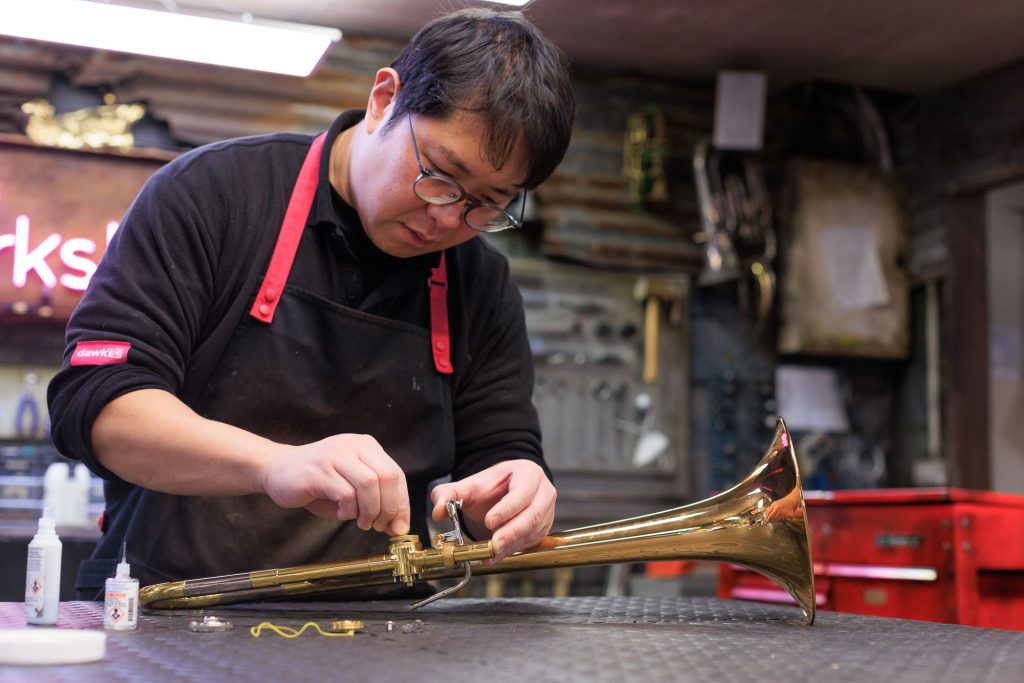
2. Slide Lock and Bell Thread Issues
The playing slide has a small ring with a tooth on it called the slide lock. This keeps the slide closed so you can safely hold the instrument with one hand, for example while turning pages. This thread can dry out or get knocked and seize up. If it isn’t moved or lubricated regularly, corrosion can build up and the mechanism can stop working properly.
Similarly, the bell section connects to the playing slide with a threaded ring. If this thread becomes dry or damaged, the bell and slide can slowly drift apart and fail to hold their correct position.
Keep these threads lightly greased and move them regularly. Mindful assembly, careful handling, and regular servicing will prevent most problems in these areas.
3. Rotor Valve Problems
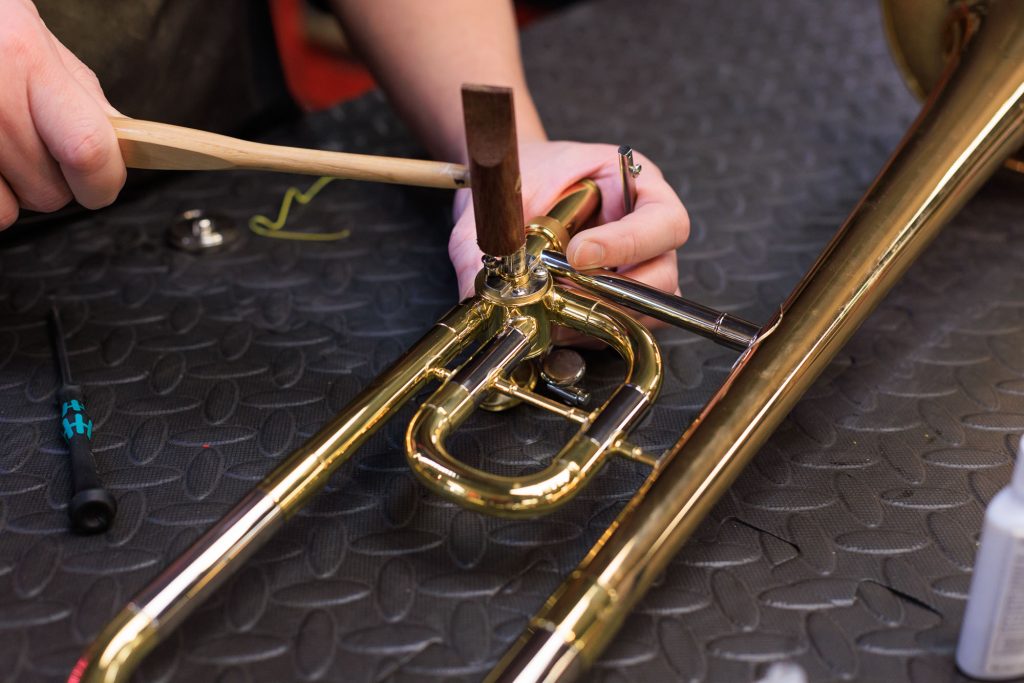
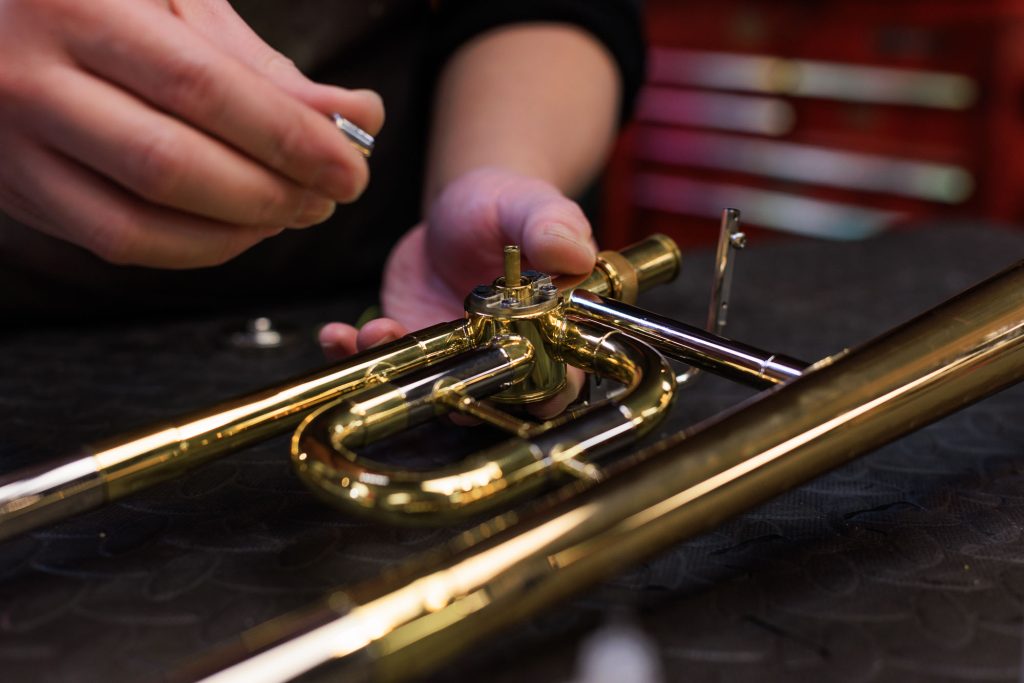
Some trombones have a rotor valve operated by a trigger. This changes the airflow through the instrument. The valve itself is a barrel-shaped rotor that floats inside the casing. At each end of the barrel are small stalks called spindles, which rub directly against openings in the casing. These spindles must be lubricated.
If they become dry or corroded, the valve can seize completely and stop moving.
The trigger is often connected to the rotor by a string that is wound in a very specific way to create leverage and a fast response. If this string becomes worn, or if any tightening screws become loose, the adjustment slips and the rotor stops responding properly. Rotor valves do not like neglect. If they are not used or lubricated regularly, they will seize.
Move the trigger every few days and learn how to lubricate the rotor correctly.
4. Material Wear and Tear
The waterkey is positioned at the bottom of the playing slide and has a long tail so it can be reached while playing. The spring on the waterkey is quite strong. It needs to keep the hole tightly sealed until you open it. However, that strength can cause problems over time.
- The spring can begin to lift or break the solder joint holding the waterkey in place.
- The cork can drift out of position and start leaking air.
- The spring can compress the cork so hard that it cuts through and leaks from wear alone.
- The spring itself can lose tension or break, also causing leaks.
Every part of the waterkey assembly needs to be balanced carefully so it seals properly without excessive force. Inside the hand slide, there are also felts or cork rings that determine how far the outer slide returns when closed. If these materials are installed too thick, or have become worn, or compressed, the slide will sit too long or too short – this can affect the intonation of certain notes.
During a service, a technician should always inspect and replace these materials where needed.

Final Thoughts
Most trombone faults are not accidents – they are the result of gradual wear, dryness, misalignment, or pressure in the wrong places.
Treat the slide gently. Keep threads and valves lubricated. Pay attention to small changes in feel or response. And get your instrument serviced before tiny issues become big ones.