Contact Us
 Visit Us
 Fast UK Delivery
 Feefo Platinum Service
How D’Addario Make Reeds: From Cane to Case
21st July 2026If you’ve ever torn open a fresh box of reeds and wondered why some are labelled “filed” and others “unfiled,” or why two reeds from the same box can feel subtly different under your lip, the answer lies in how D’Addario make reeds – a process that starts years before the reed ever reaches your mouthpiece.
Here’s a look at how raw cane becomes the reeds clarinettists and saxophonists rely on every day.
1. It Starts With Cane Tubes
Every reed begins life as Arundo donax, the giant cane plant used almost universally in reed-making. D’Addario don’t harvest this cane on a whim. Instead, they grow it for around two years, letting it reach heights of roughly 10 metres before they take it.
The longer growing period gives the cane the density and fibre structure it needs to produce a stable, responsive reed. After all, rush the growing process, and you rush the sound.
2. Splitting the Tubes
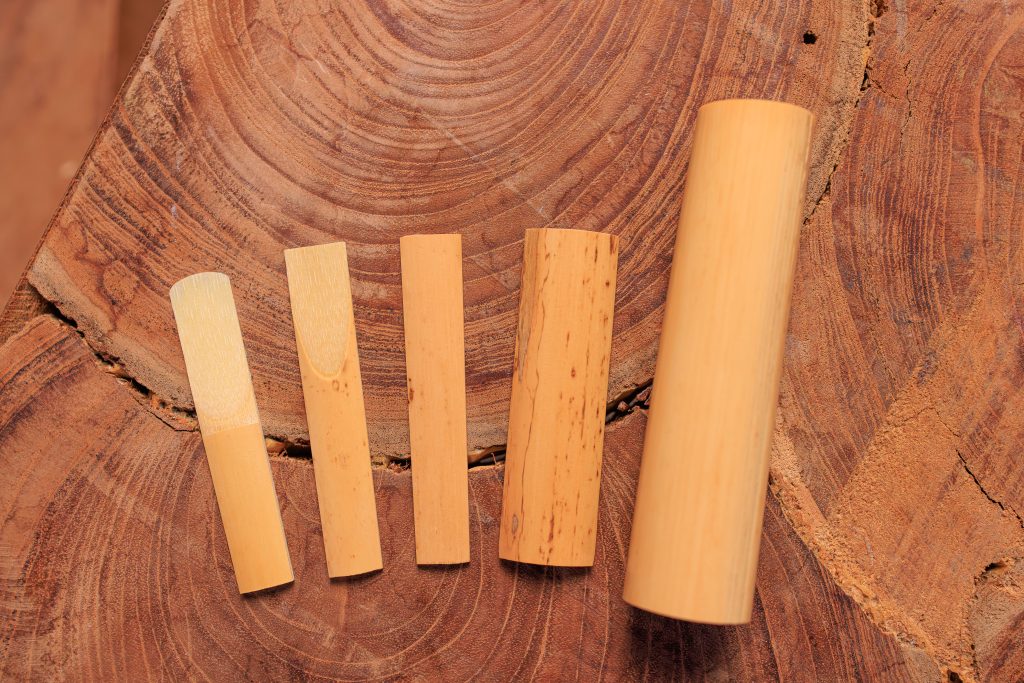
Once the cane is ready, D’Addario cut down and split the tubes. This is the first stage where a round length of raw plant material starts to look like something recognisable as reed-in-progress. From here, splitting separates the cane into sections that workers can then shape into the familiar reed form.
3. Shaping the Blank
Next, they shape the split cane into a “blank” – flat on one side, curved on the other. At this point, precision takes over from raw material. D’Addario laser-measure and plane each blank flat, which locks in a consistent thickness and profile across every single piece moving down the line.
This step is really where quality control begins in earnest. Since a laser doesn’t get tired or make judgement calls, it delivers the kind of consistency that helps modern reeds play more predictably than cane cut by hand ever could.
4. The Vamp Cut
After that, D’Addario apply the pre-vamp cut – the stage where the reed’s tip and vamp (the thinned, curved section that actually vibrates against the mouthpiece) start to take shape. This cut counts among the most critical in the whole process, because it determines how the reed will eventually respond and flex once a player’s air hits it.
5. Filed vs Unfiled: How D’Addario Make Reeds With Different Finishes
Finally, D’Addario finish each reed as either filed or unfiled. As a result, players get a varied choice in sound character, depending on the quality they prefer.
- Filed reeds have had the bark removed from the shoulder area, which creates a smoother transition and generally delivers a quicker, brighter response.
- Unfiled reeds keep that bark intact, so they tend to offer a warmer, sometimes more resistant feel.
Ultimately, it comes down to the sound and feel you’re after, so it’s worth trying both if you haven’t already.


Final Thoughts
Next time you’re comparing filed and unfiled, or wondering why a particular strength feels different between brands, remember this: years of growth and multiple stages of precision manufacturing go into every single reed, long before it ever reaches your case.
Curious to try D’Addario reeds for yourself? Pop into Dawkes or get in touch with our team, and we’ll help you find the right cut for your sound.