Contact Us
 Visit Us
 Fast UK Delivery
 Feefo Platinum Service
Silver Care Guide: How to Prevent Tarnish and Protect Your Sound
23rd June 2026If you play a silver-plated or solid silver instrument – woodwind or brass – you’ve probably noticed dull yellow or even black patches building up after a few weeks of regular play. That’s tarnish, and it’s completely normal. Left untreated, though, it can affect your instrument’s appearance, resale value, and even how it feels under your fingers. In this silver instrument care guide, our workshop technicians walk you through how to prevent tarnish and the daily habits to help protect your sound for years to come.
1. Understand Why Silver Tarnishes
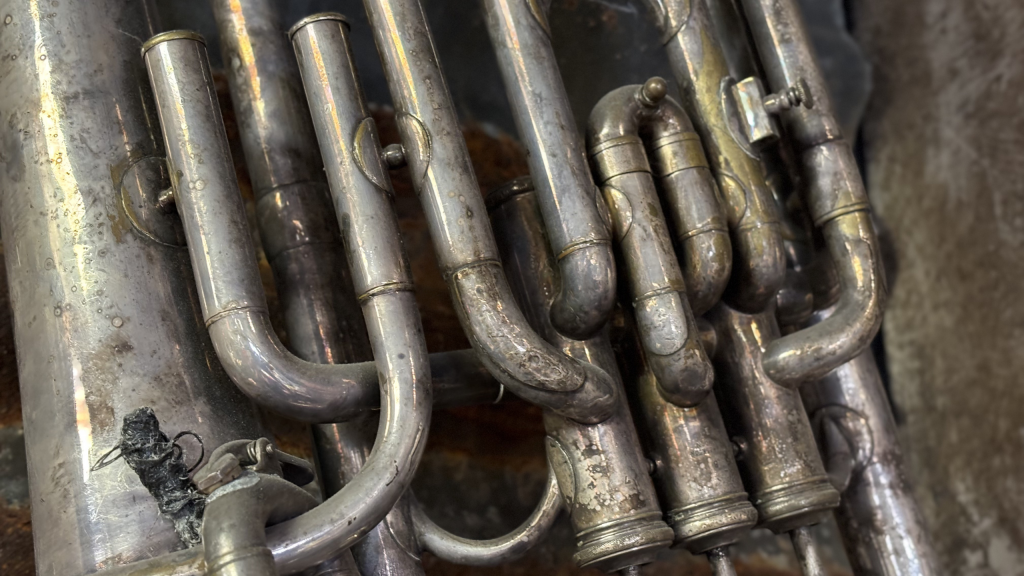
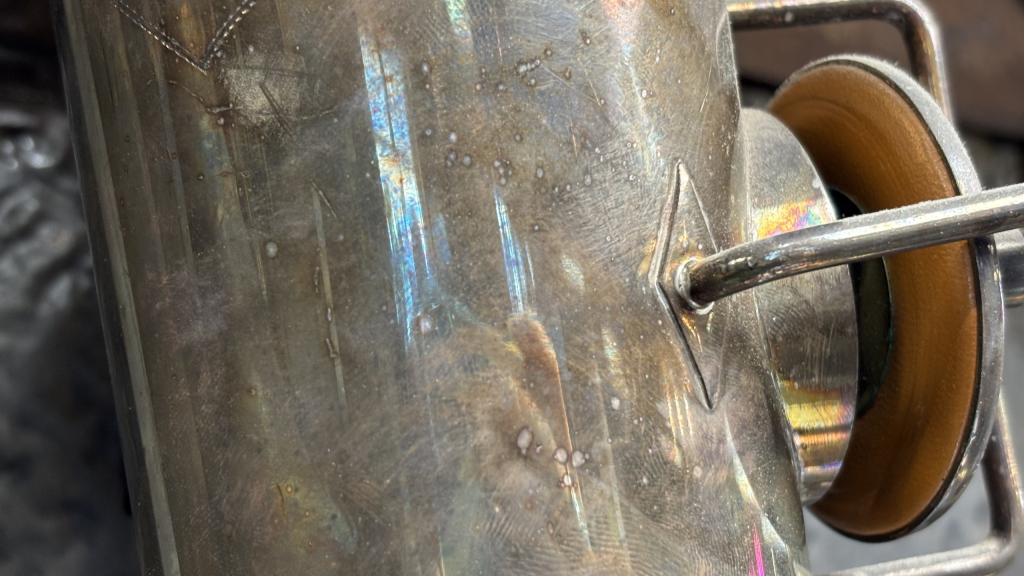
Tarnish isn’t dirt, it’s a chemical reaction. When silver meets sulphur compounds in the air, on your skin, or in your saliva, it forms silver sulphide: that dark, dull layer building up on keys, tone holes, and bell rims.
A few everyday factors speed this up:
- Skin contact and sweat – the acidity in your skin reacts with silver every time you handle the instrument
- Humidity – damp environments accelerate tarnishing, which is why instruments stored in bathrooms or unheated rooms tarnish faster
- Saliva and breath moisture – condensation inside woodwind instruments is a major tarnish trigger, especially around tone holes and keywork
- Airborne pollutants – sulphur dioxide from traffic fumes, perfumes and household cleaning products can all contribute
- Storage materials – some rubber case linings, and mouthpieces made of ebonite, release sulphur compounds that react with silver over time
Solid silver tarnishes faster than silver plating, simply because there’s more pure silver exposed to the air. That’s not a negative, many players love the tonal qualities of solid silver flutes and saxophones, it just means slightly more frequent attention.
2. Know Whether You Have Plated or Solid Silver
This matters because the wrong cleaning technique can cause real, irreversible damage.
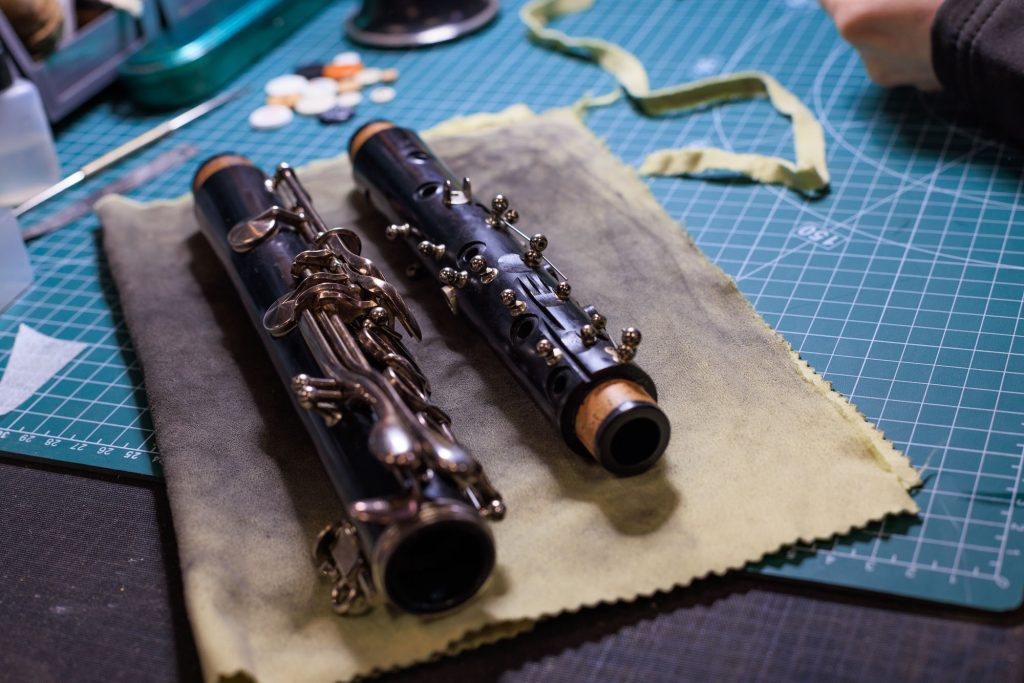
Silver-plated instruments (common on flutes, saxophones, clarinet keys, and brass like trumpets and trombones) have a thin layer of silver bonded to a base metal, usually brass or nickel silver. Overly abrasive cleaning can wear through this plating, exposing the base metal underneath – something only a professional re-plate can fix.
Solid silver instruments (typically higher-end flutes, some saxophone necks and bodies, and certain clarinet barrels) are silver all the way through. They can handle slightly more robust cleaning since there’s no plating to wear away, though they’re more prone to scratching and denting.
If you’re ever unsure which you have, treat it as plated. Gentle, consistent care beats aggressive polishing every time.
3. Treat Tarnish With the Right Method
For light tarnish on plated instruments, a soft, dry polishing cloth is usually enough. Wipe gently in straight lines rather than circles. For moderate tarnish, use a specialist silver polish made for musical instruments, never household silver polish or dip, which can strip plating. Keep all polish away from pads, corks, felt, and springs.
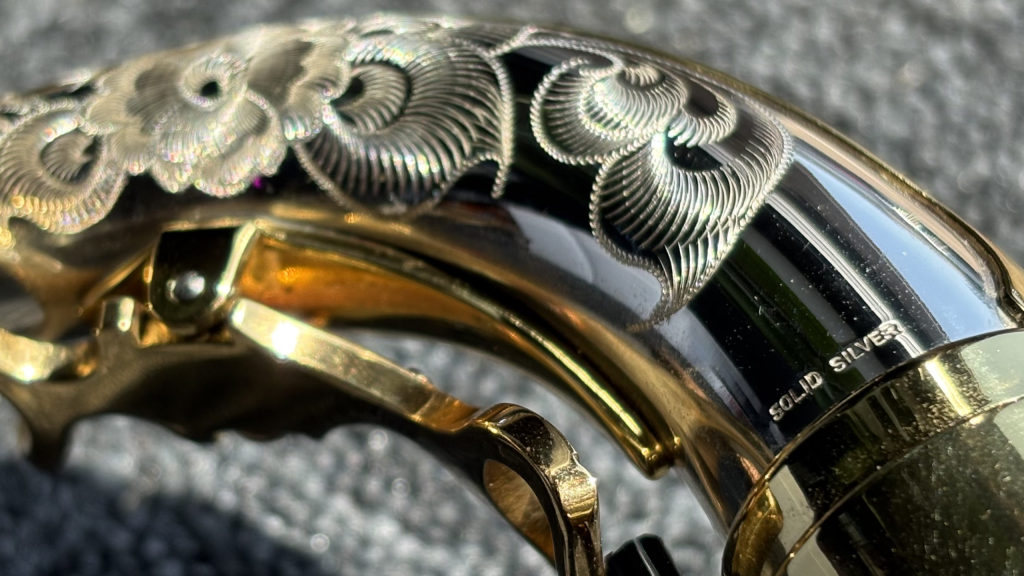
For solid silver, a dedicated silver polishing cloth handles most regular upkeep. Heavier tarnish can take a proper silver polish, but always test on a small area first. Avoid silver dips around mechanisms or soldered joints, as the chemicals can damage pad seating or loosen joints. Any engraved or oxidised-finish areas are best left to a professional, since ordinary polishing will remove the deliberate dark finish.
If tarnish has built up heavily around pads or joints, or you notice green or white residue (a sign of corrosion rather than simple tarnish), it’s time to book the instrument in with a repair workshop rather than tackling it yourself.
4. Build a Simple After-Play Routine
Most tarnish comes down to what happens, or doesn’t happen, in the few minutes after you finish playing. A quick routine makes the biggest difference of anything in this guide:
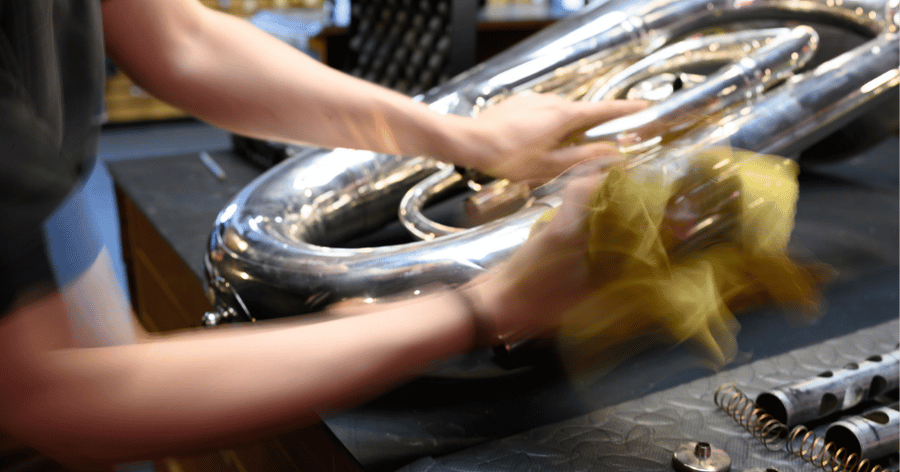
- Wipe down the exterior with a soft, dry cloth as soon as you finish playing
- Swab out the inside of woodwind instruments to remove condensation
- Dry the keys and rods, particularly underneath where moisture collects
- Wipe brass and silver-plated brass instruments externally, paying attention to the bell and slide areas
- Check for fingerprints specifically, as they’re the fastest route to tarnish
- Clean ebonite mouthpieces and store in a separate pouch to limit contact with the instrument
Two minutes after every session will save you hours of polishing later.
5. Store Instruments Properly
Storage is where a lot of tarnish damage actually happens, often without players realising it. Use a hard case with a soft, breathable lining, and avoid rubbers or foams known to release sulphur compounds. Keep instruments away from bathrooms, damp cupboards, and anywhere temperature or humidity fluctuates. Anti-tarnish strips or silica gel packs in the case help, especially in humid or coastal areas.
When in Doubt, Get in Touch
Tarnish is simply part of owning a silver or silver-plated instrument, it isn’t a sign of poor quality or a mistake on your part. With a quick wipe-down after every play, the right products for your specific instrument, and sensible storage, you can keep tarnish to a minimum and avoid the kind of damage that’s harder to undo.
If you’re ever unsure whether tarnish has become something more serious, our workshop team is always happy to take a look. Get in touch and we’ll help make sure your instrument keeps looking and playing its best for years to come.