 Contact Us
 Visit Us
 Fast UK Delivery
 Feefo Platinum Service
Common Saxophone Playing Issues (and How to Fix Them)
27th July 2026Whether you’re a beginner working through your first scales or a teacher trying to diagnose a student’s frustrations, certain saxophone problems come up again and again. In this blog, we’ve put together 3 of the most common saxophone playing issues that Thom and Maddie encounter through their teaching – and the good news? Most of them have straightforward solutions so you know how to fix them.
1. The Third Finger Problem
If you’re playing a passage that moves from C# to D (or similar transitions involving your third finger), you might have noticed the note split suddenly. Let us explain: your third finger activates a hidden octave mechanism built into the saxophone’s keywork. When you’re not precise enough with the finger change – lifting or pressing even slightly out of sync – the mechanism gets triggered at the wrong moment, and the note cracks or splits.
The fix: focus on clean, precise finger movement. Your third finger needs to come down (or lift off) decisively and at exactly the right moment, not lazily or in stages. Practise the problem transition slowly, paying close attention to how cleanly the finger is moving. Speed it up only once it’s consistently clean. This is a coordination issue, not an embouchure one – so if you’re tightening your mouth to compensate, ease off and work the fingers instead.
Teaching tip: isolate the transition. Have students play just the two notes back and forth slowly, listening for any hint of a split. Once they can do it cleanly at a slow tempo, gradually increase the speed. Drawing their attention to the finger rather than the sound often clicks faster than any verbal explanation.
2. Sticky Keys
Every sax player knows this one. You press a key and it sticks, or you hear a distracting pop or bubble as a pad peels away from the tone hole. Sticky keys are a menace, and they tend to show up at the worst possible moments.
There are a few common causes. Playing a cold instrument means the warm air from your lungs creates excess condensation inside the horn – moisture sits on the pads and makes them tacky. Students who’ve had a fizzy drink before playing compound the issue: sugars travel through the condensation and build up on the pad surfaces. And if the instrument isn’t being cleaned out properly after each session, all of that residue accumulates over time.
Top Tip: pay attention to the low C# and G# keys. These sit closed most of the time, trapping moisture underneath the pad with nowhere to go and are common culprits of notes not speaking when you need them most!
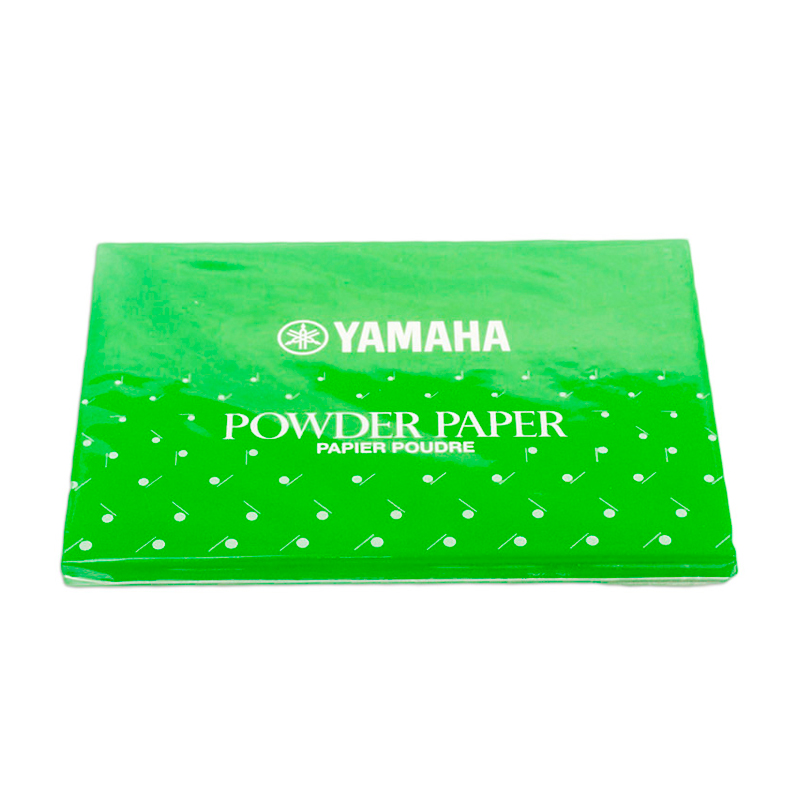
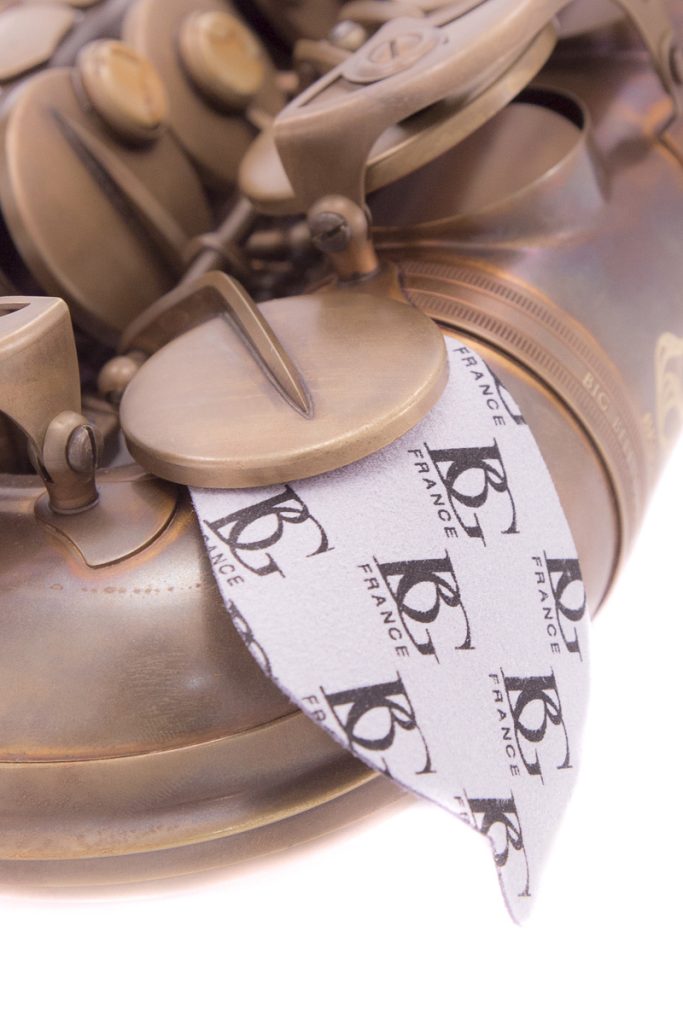
The fix: get into the habit of swabbing out your saxophone after every playing session – no exceptions! Keep powder paper or a pad dryer in your case so you can deal with sticky pads on the spot. A quick slip of powder paper between the pad and the tone hole absorbs moisture. For persistent stickiness, a purpose-made pad cleaner works well.
Teaching tip: make cleaning part of the lesson routine. If you build it in as the last two minutes of every session, students develop the habit early. It’s also worth a quick conversation about what they’re drinking before they play – water is the saxophonist’s best friend.
3. Alternative Fingerings
Some passages just feel impossible with standard fingerings. Notes that are technically straightforward on their own become a tangle when strung together at speed. This is where knowing a few alternative fingerings can save you.
Alternative fingerings aren’t cheats – they’re legitimate options built into the instrument’s design, and can even be good alternatives for tuning as well as complex passages. Here are two particularly useful ones:
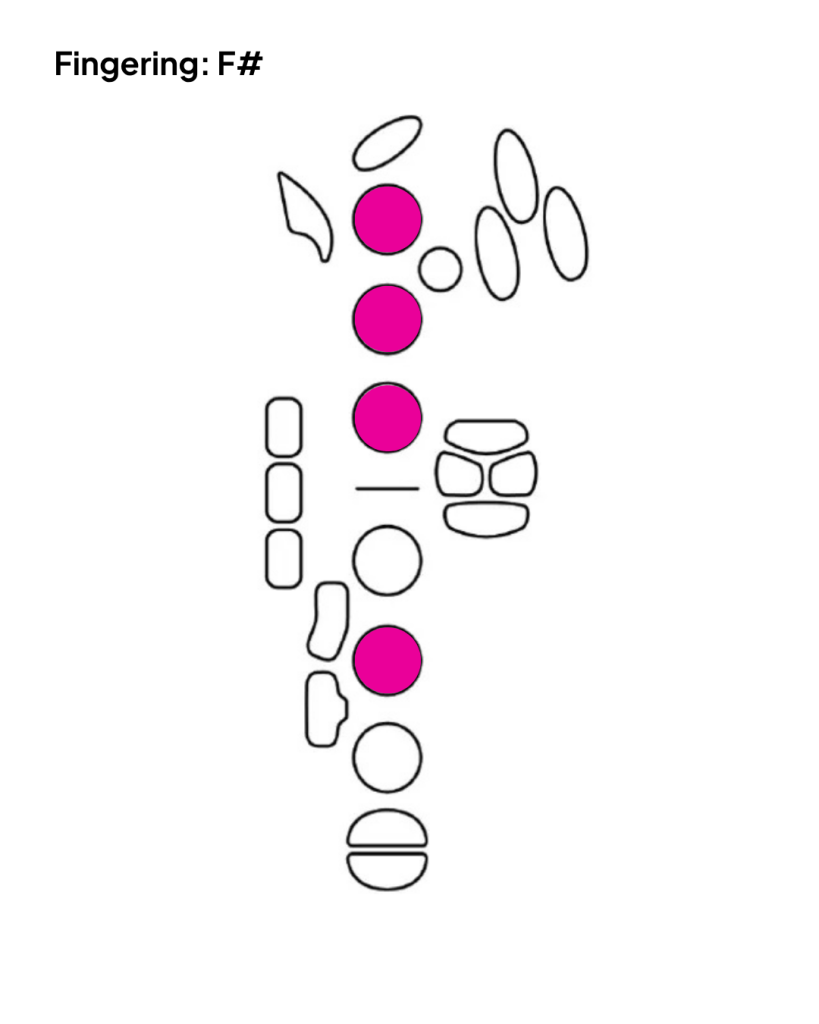
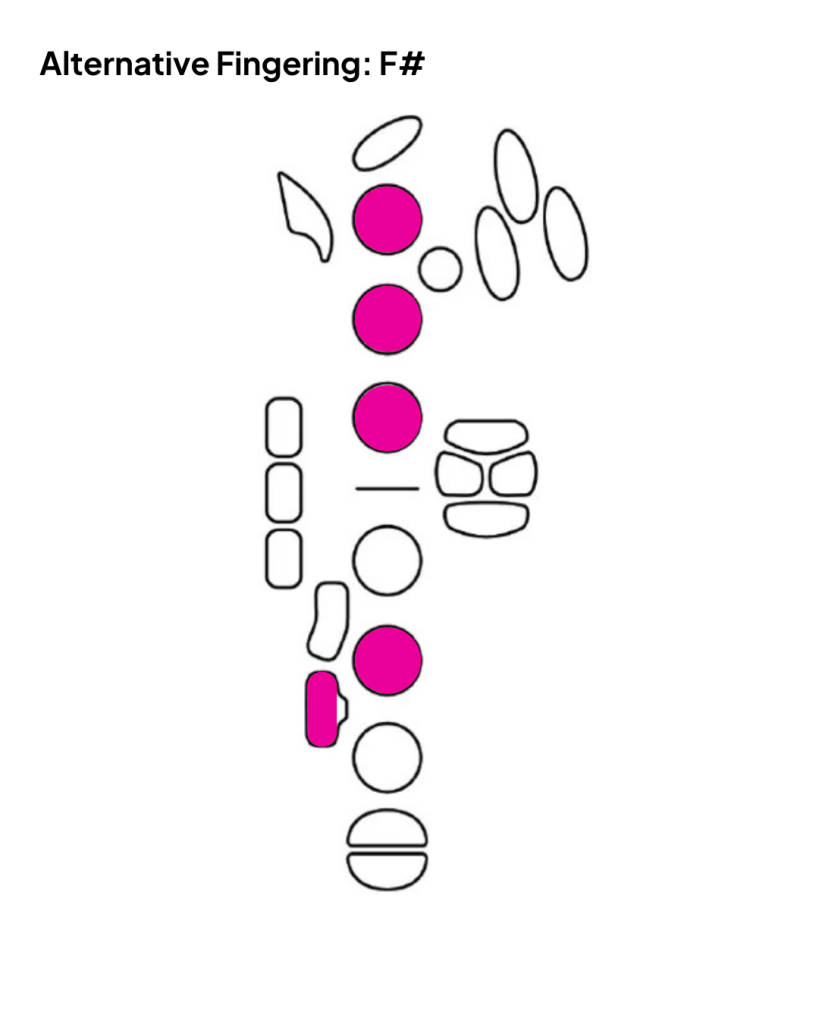
Alternative F#: Instead of the standard fingering, use the dedicated side F# key. This is especially useful for passages that move quickly from F to F# to G, where the standard fingering requires an awkward slide or jump. The side key keeps your fingers in a much more natural position for that sequence.
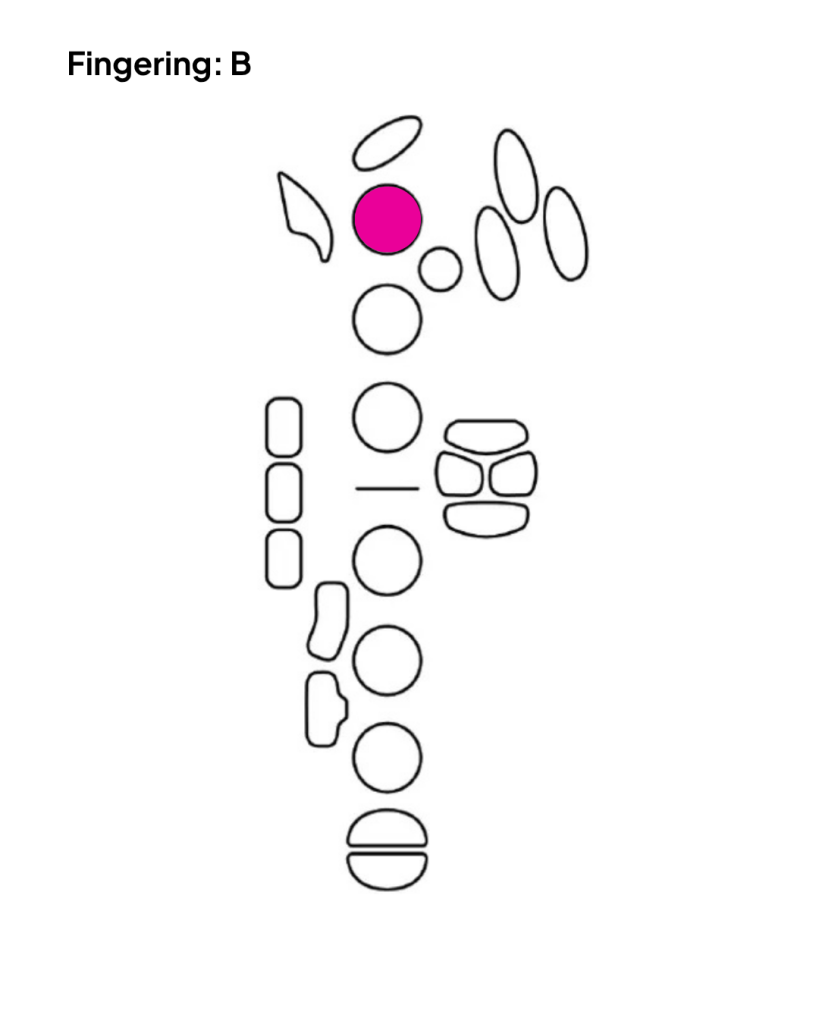
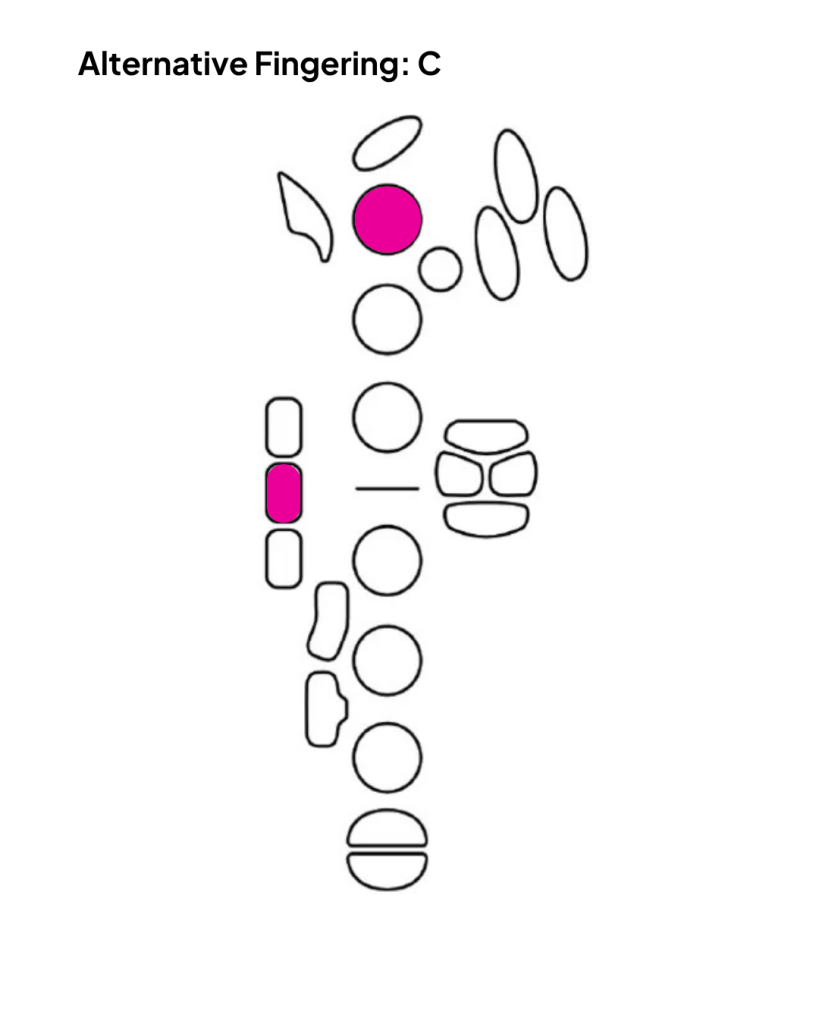
Alternative C: This uses a simplified fingering that’s invaluable in two situations: B-to-C trills (where you need rapid alternation between the two notes) and passages that move through B, C, and C# in quick succession. The standard fingering for C in these contexts requires more finger movement than you can cleanly manage at speed, so the alternative version smooths things out.
Teaching tip: don’t introduce alternative fingerings too early – students should be comfortable with the standard fingerings first. But once they start encountering passages that feel physically awkward despite good technique, that’s the moment to show them the alternatives. Frame it as problem-solving: “Here’s another way to play that note that works better in this situation.” Learning when to use each option is as important as learning the fingering itself.
Final Thoughts
Most saxophone problems aren’t mysterious – they’re mechanical. A bit of knowledge about what’s happening inside the instrument, some targeted practice, and good maintenance habits will clear up the vast majority of issues that frustrate beginners and intermediates alike. And if you’re a teacher, knowing these fixes means you can diagnose and solve problems quickly, keeping your students focused on making music rather than fighting their instrument.