 Contact Us
 Visit Us
 Fast UK Delivery
 Feefo Platinum Service
Quick Guide to D’Addario Clarinet Reeds
20th January 2026Everybody needs a good reed. It doesn’t have to be expensive, but it does have to be good quality. That means no chips, no discolouring, and no warping. Your reed is where your sound starts, so it matters more than most players realise. Pro player Jason Alder brings you this quick guide to D’Addario clarinet reeds, explaining the journey from student reeds through to premium options, showing how the right cut and profile can completely change how your clarinet feels and sounds.
How a Clarinet Reed Works
Your reed is a thin piece of cane that vibrates against the mouthpiece when you blow. That vibration is what creates your sound. The profile, heart, and cut of the reed affect how easily it responds, how warm or bright your tone is, and how much control you have across the full range of the instrument.
Over time, reeds can warp, split, or dry out due to humidity and temperature changes. That’s why Jason always checks his reeds carefully, rotates them and stores them correctly. Even a great reed won’t play well if it’s damaged or uneven.
Rico & Royal: The Student Starting Point
Most players begin with Rico by D’Addario – the famous orange box reeds. They’re designed to work straight out of the box, with a thinner profile that responds easily and helps students get a sound quickly.
The Royal by D’Addario reeds (blue box) are the natural step up. They have a slightly different cut and profile, giving a bit more control and depth while still being easy to play.
Both Rico and Royal reeds are made using digital vamping technology. Every reed is maintained through strict quality assurances. That’s how D’Addario ensure consistency from reed to reed, so you’re not guessing every time you open a new box.


What Changes with Premium Reeds?
So what do you demand more from a premium reed? Jason says it’s about character, depth, tone colour, and longevity. Premium reeds give you more shades in your sound – more warmth, more flexibility, and more expressive potential. They also tend to last longer and stay consistent for more playing hours.
All D’Addario reeds use the same high-quality cane across the range, student to professional – what changes is the cut and profile.
Reserve & Reserve Classic Reeds
The D’Addario Reserve range is aimed at players working on exams, recitals, orchestral music, and advanced repertoire. The standard Reserve reed has a slightly thicker profile, giving more depth, quality, and stability in the sound. The filed cut removes a little material, making it freer-blowing, brighter, and more projecting.
The Reserve Classic takes this a step further. It has a minutely thicker heart and profile (controlled by digital vamping technology), leaving more material to vibrate. That extra mass gives more warmth, depth, and tonal colour, with very clean articulation.


From a playing point of view, Jason feels the standard Reserve has a touch more clarity and brightness, while the Reserve Classic offers more depth and a slightly cleaner response. Both play beautifully – it really depends on your setup, your playing environment, and the sound profile you’re aiming for.
Reserve Evolution: Jason’s Go-To Reed
Jason’s personal choice is the Reserve Evolution, in a 3.5+ strength. This reed is unfiled, meaning there’s more material around the shoulder and heart of the reed. That gives the sound more body, warmth, and complexity.

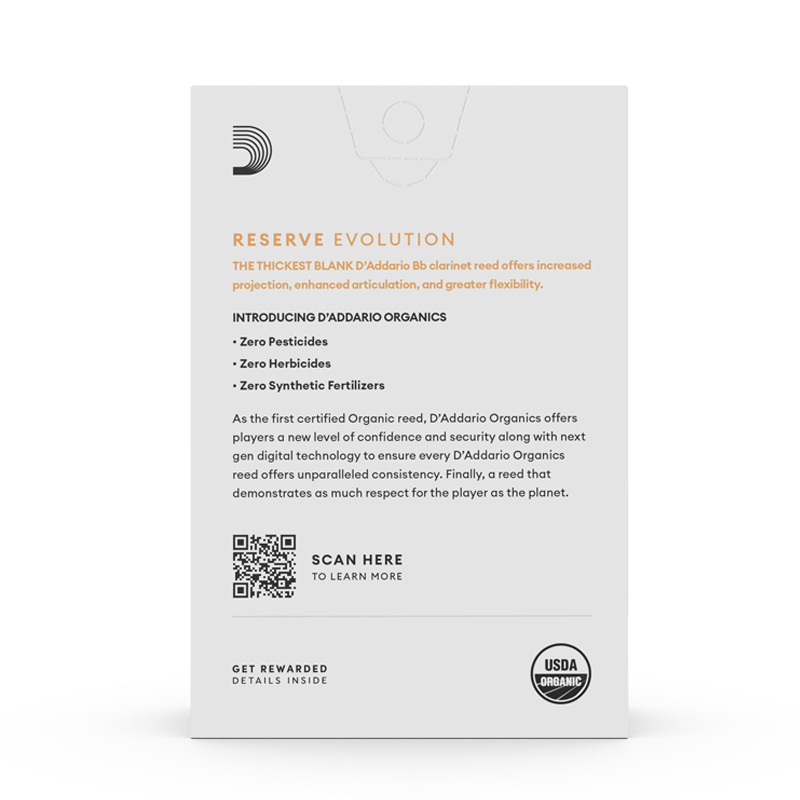
Jason describes it as richer and smoother with a slight “ping” in the sound that helps projection without losing warmth. It pairs perfectly with his preferred EV10 Evolution Marble mouthpiece, giving him a setup that feels free, expressive, and stable across all registers.
Sustainability & the Organics Range
D’Addario’s premium reeds are part of the Organics Range. That means: paper packaging, tight quality control, and cane grown without artificial pesticides or herbicides. The plantations are fully USDA certified, and everything is controlled right from the field to the finished reed.
How to Test Reeds on Your Setup
When trying reeds, Jason recommends checking: how quickly they respond, how easy articulation feels, and the overall sound colour – is it warm, bright, deep, or clear? Always check tuning with a tuner too. The right reed should feel good to play on and sound right in the room you’re in.
Final Thoughts
There’s no single “best” reed – but there is a best reed for you. D’Addario give you a clear path from student to professional. The cane stays premium throughout – the cut evolves with your playing.
As Jason puts it: “Everybody needs a good reed.” Find the one that lets your sound do what you want it to do.