 Contact Us
 Visit Us
 Fast UK Delivery
 Feefo Platinum Service
Technician Tales: Common Trumpet Faults and How to Prevent Them
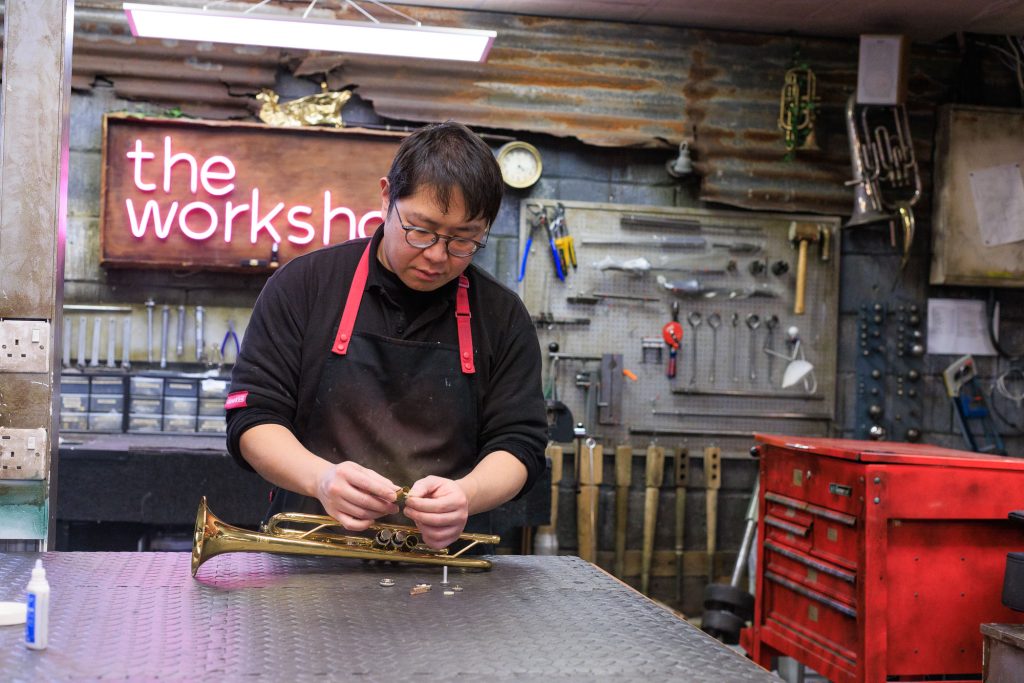
8th October 2025Looking after your trumpet keeps it playing smoothly and sounding its best. Small issues can quickly become big problems if ignored. Head Technician, Abi Taylor, brings you this guide on the most common trumpet faults and how to prevent them, helping you avoid an emergency trip to our workshop!
A View from the Bench
29th July 2025By Abi Taylor, Head Technician
In collaboration with the British Double Reed Society, their Spring 2025 edition for ‘Double Reed News’ features Abi Taylor, our Head Technician, who offers a personal look into life at the repair bench. “A View From the Bench” shares insights into the craft that keeps our instruments – and performances – in top form.
From the Workshop: Favourite Tools (Abi)
5th July 2021In this series of blogs we catch up with some of our Repair Technicians and ask them for 3 of their favourite tools, either traditional models or perhaps something they have modified for their own use! This time it’s Abi…
Remarkable Repairs
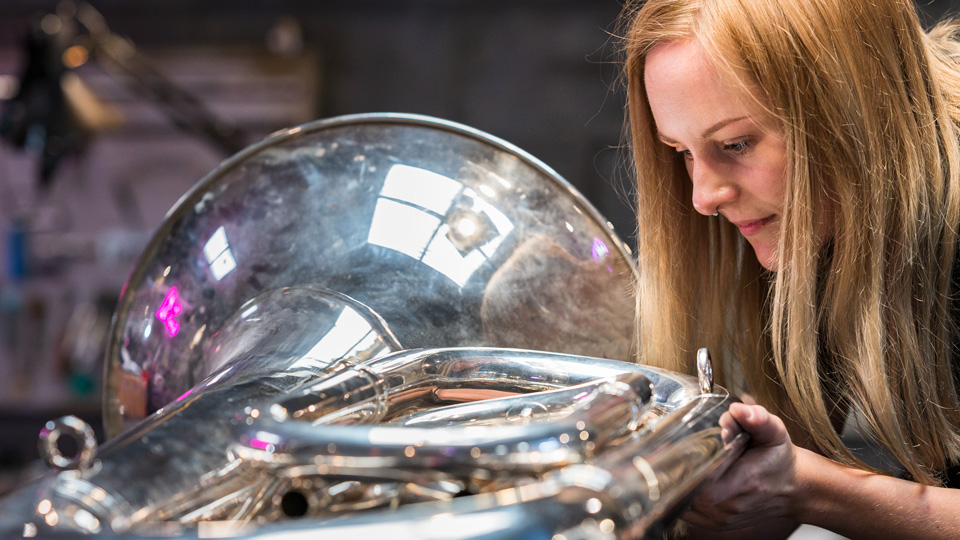
23rd March 2018Here at Dawkes, we are lucky to say that our business thrives on the strength of not only our friendly sales team but also our technically qualified repairers in our onsite workshop. We employ more qualified brass and woodwind repairers than any business in the UK, and are proud of our legacy built by Jack Dawkes back in the 1960’s from a shed in his back garden.
Dawkes Music Workshop: Saxophone Split and Patch
24th December 2015This Buescher 400 ‘top hat & cane’ came to us as a recent purchase for general set-up.
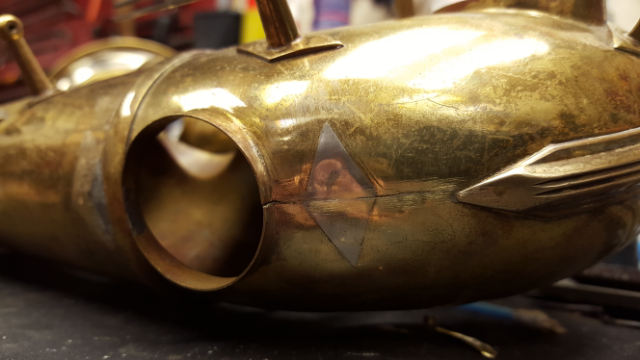
The biggest problem we found was a small split running along the bottom bow and into the low Eb tone hole. This would cause the pad to leak air from the split so it needed to be filled one way or another.
Trumpet Re-Lacquering in the Dawkes Music Workshop
22nd December 2015This Bach Stradivarius Trumpet has had a new leadpipe fitted as the red rot on the underside rendered it un-preppable for relacquer.
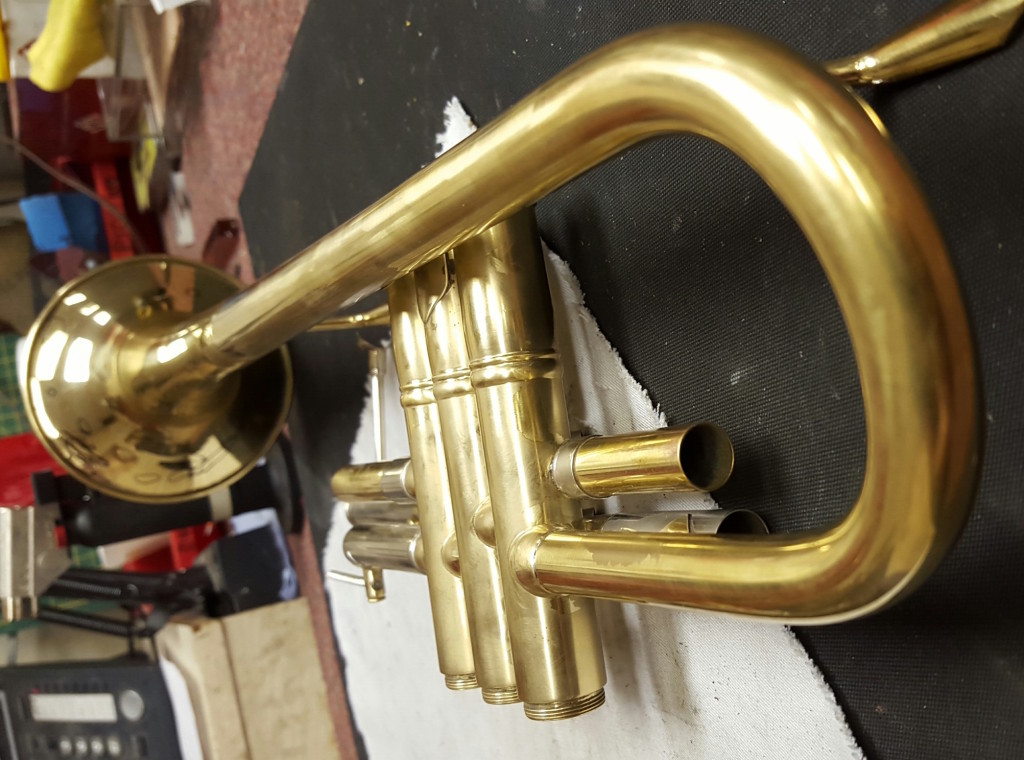
If metal is too rotten, it will not be able to withstand the invasive filing, sanding and pressure of the re-surfacing work. During the preparation of the surface, all dents and scratches have to be removed and the metal is filed and polished to a mirror finish. This is the most important stage as any remaining imperfections will show up tenfold under new lacquer.
Restoration in the Dawkes Music Workshop
27th November 2015Sunniva, one of our dedicated workshop repairers, was so happy with one of her latest restoration jobs she shared it on her personal blog. She did such a great job on this J. Higham cornet we thought the internet deserved to see this beauty.
National Association of Musical Instrument Repairers Hold AGM at Dawkes
9th November 2015The National Association of Musical Instrument Repairers (NAMIR) held their Annual General Meeting at Dawkes Music on Sunday 1st November. Some of our repairers and spare parts experts attended and let us know what happened.
Workshop Tips: How we fix clarinet cracks
23rd July 2015BEFORE: 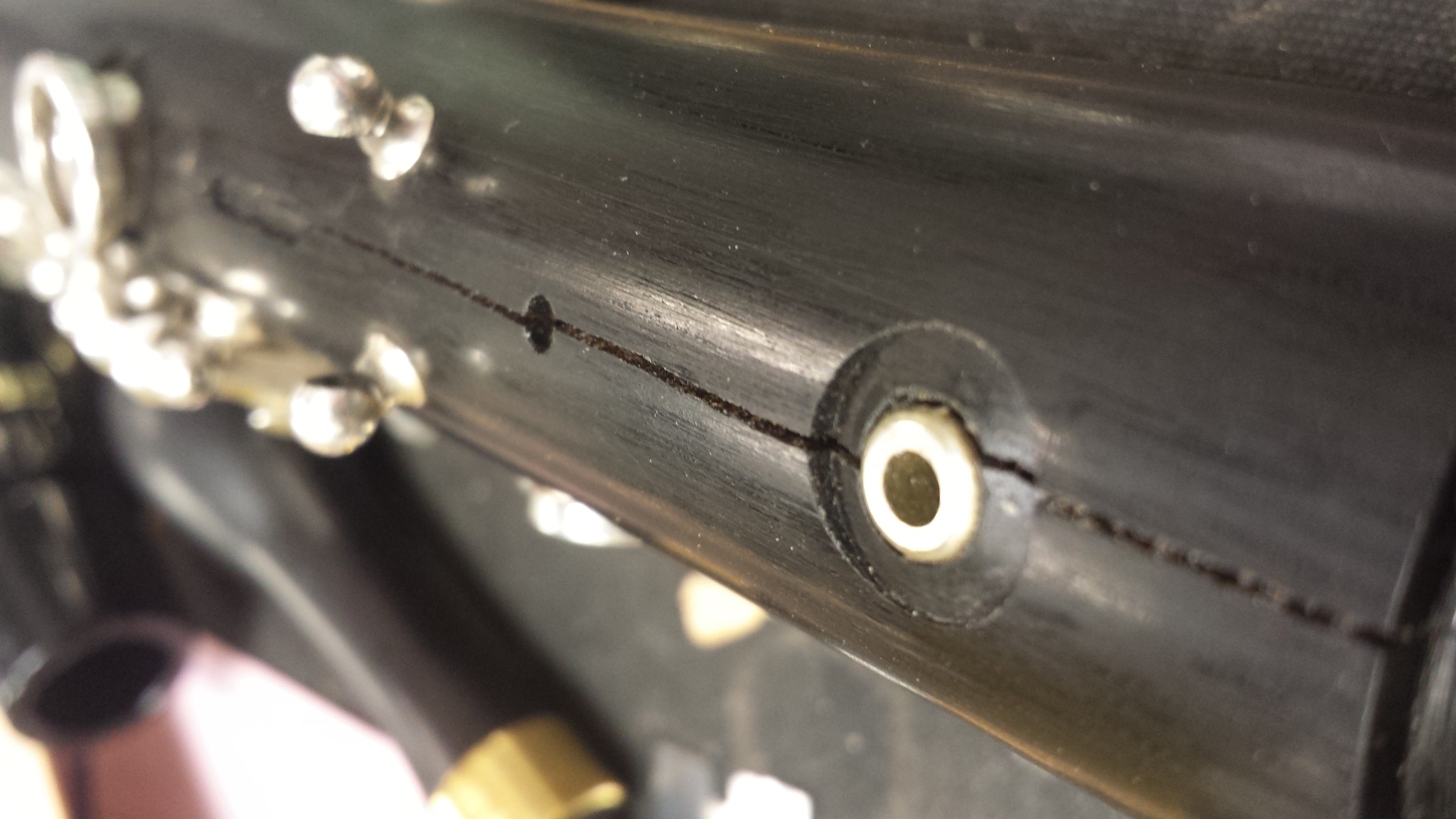
This Buffet R13 came into our workshop with an enormous crack in the top joint, running through the speaker tube and into the thumb bush. Miraculously, the crack had not travelled through into the bore of the instrument, so we were able to fill and secure the crack using wood powder, glue and a lot of patience.